
TL;DR
You can start affiliate marketing without an email list by choosing a suitable product, creating a simple page about it and using Facebook to attract interested visitors. At this point, you don’t need an autoresponder, expensive software or a complicated sales funnel. I think it’s better to focus on one product and one traffic source, create useful content and introduce email marketing later if you decide you need it.
One of the biggest problems I see with affiliate marketing is how complicated people make it, particularly for beginners. Before they’ve even chosen a product, they’re being encouraged to build landing pages, create email sequences, purchase software and connect everything together. I don’t think this is particularly good advice for someone who’s just getting started.”
I don’t think there’s anything necessarily wrong with those things. I use email marketing myself, but I believe there’s a better, simpler way to get started. Instead of worrying about building an entire marketing system, I think it’s better to concentrate on learning how to attract people who might actually be interested in what you’re promoting.
Here’s how I would go about it.
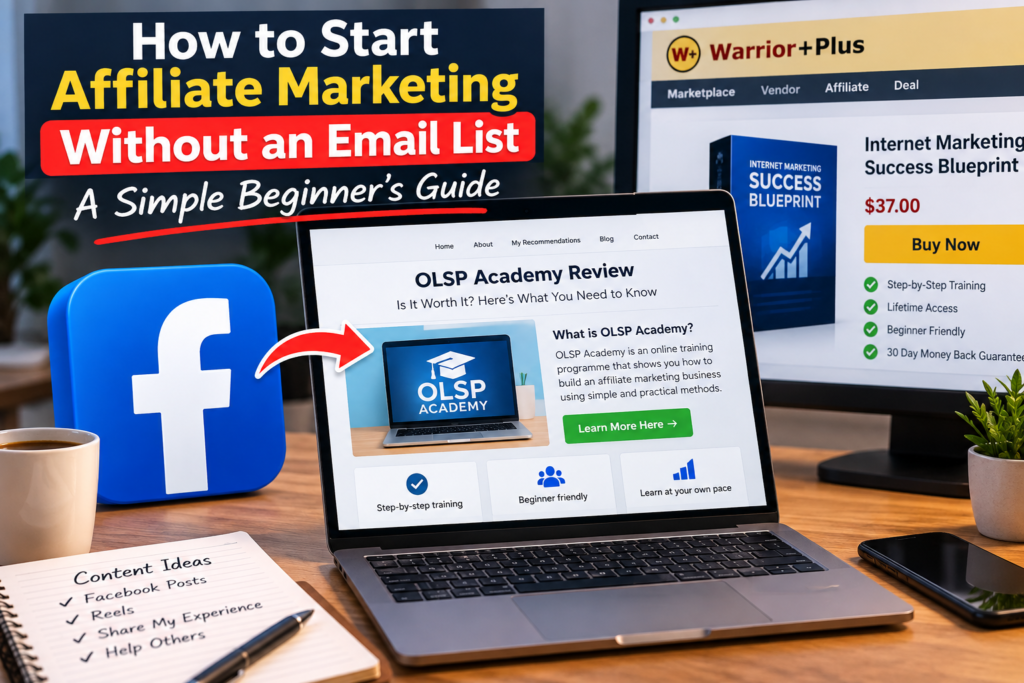
Choosing an Affiliate Product to Promote
Before creating content or worrying about traffic, decide what you’re going to promote. There are various affiliate marketplaces such as ClickBank or WarriorPlus and you can explore these to find products related to your interests. However, I wouldn’t recommend choosing a product based on the fact it offers an attractive commission.
Think about the people you’re trying to reach. What problems are they facing? What information are they looking for? Does the product you are considering genuinely offer something useful to your audience? These questions do matter because you’ll be creating content around your chosen subject.
For example, I promote OLSP Academy because it’s something I use myself and it relates directly to the affiliate marketing content I create. The product you choose might be completely different. From experience, I can say that the more you know about your chosen subject or niche, the easier things become. Knowledge will allow you to create content with ease and confidence, rather than constantly switching between offers.
If you’d prefer to watch me explain the process, here’s the video that accompanies this article.
How to Start Affiliate Marketing Without an Email List Using a Simple Page
Imagine someone comes across one of your Facebook posts and wants to learn more about the product you’ve mentioned. Where should they go next?
Well you could send them straight to the company’s sales page, but I prefer to give people an opportunity to understand what I’m recommending first.
One way to approach affiliate marketing without an email list is to create a simple content page that visitors can read before deciding whether to explore your chosen product.
You can start affiliate marketing without a website of your own by creating a page using Blogger or Google Sites. Both of these options will allow you to publish content without purchasing web hosting.
What Makes a Useful Affiliate Content Page?
Think of your page as a helpful introduction to the product rather than another blatant sales pitch. Explain who might benefit from it, what it offers and anything someone should consider before buying.
If you’ve used the product yourself, then include some of your own observations. Say what you like and anything you don’t like. Of course it’s entirely possible you may not find any faults with the product at all, but aim to be honest. It is worth including screenshots or practical examples to help readers understand what they’re looking at. Also include your affiliate link where it makes sense, along with a clear disclosure of your affiliate relationship.
Additional guidance on affiliate disclosures from the UK Advertising Standards Authority
The idea here is to help people make an informed decision, rather than simply pushing them towards a purchase.
How to Use Facebook for Affiliate Marketing Without Cold Messaging
Now we come to the part that many beginners find difficult: getting people to see their content. For this example, let’s concentrate on Facebook affiliate marketing without cold messaging.
The first thing I would do is make sure your Facebook profile clearly explains what you’re about. For example, it could be something like ‘I help retired professionals explore ways to earn additional income online.’
If somebody enjoys one of your Facebook posts, they may decide to visit your profile. Give them a clear idea of the subjects you discuss and include a link to your content page so they can explore further.
The idea here is not to turn your profile into a sales page. Just make it easy for interested people to find out more.
Build Trust on Facebook Without Hard-Selling
One approach I use is talking about things I’m actually working on. For example, I recently shared a Facebook post about testing a new traffic source for my affiliate marketing business. Rather than promoting a product, I talked about the experiment and what I was trying to achieve.
A post of this kind can encourage people to become curious about what I’m doing. You could use a similar approach by sharing a lesson you’ve learned, discussing a problem you’ve encountered or explaining something you’re currently testing.
These posts don’t need to contain affiliate links. The purpose of these posts is to share something useful or interesting with your audience. Giving value can build trust with your audience also. People have their guard up when it comes to online offers these days and the more trust you can build the better it will be for you.
Using Facebook Engagement to Grow an Affiliate Audience
Not every Facebook post needs to teach something. Sometimes, just asking a simple question can be enough to get people involved and engaged. I tried this with a true-or-false post that received more than 40 reactions and over 40 comments.
I’ve also experimented with Facebook Reels. One Reel about an affiliate marketing experiment attracted more than 50 comments, 75 reactions and 15 shares. These are examples of engagement rather than evidence of sales, but they demonstrate how different content formats can encourage people to interact. The goal here is not to sell, but to build engagement and trust.
You can also participate in relevant Facebook groups, provided your posts follow the group’s rules. Search for your niche in Facebook. There are plenty of Facebook groups covering different subjects, so spend some time finding those that are relevant to your niche. Just make sure you read the group rules before posting.
If you’re just starting out, though, I wouldn’t attempt everything at once. Choose a format you’re comfortable with and build from there.
For more ideas, read my article on Facebook Affiliate Marketing Without Cold DMs
Affiliate Marketing Without an Email List: When Should You Start Building One?
Although you can promote affiliate products without an email list, email marketing is something worth considering as your business develops and has gained traction. It allows you to communicate directly with people who have chosen to receive information from you.
That being said, building an email list doesn’t automatically solve the problem of attracting visitors. You still need people to discover your content and become interested in what you’re offering. This is why I recommend concentrating on learning how to attract the right audience first.
Once you have a clearer understanding of your audience and the type of content they respond to, you can decide whether building an email list would be a useful next step to take.
Keep Your Affiliate Marketing Setup Simple
If you’re starting affiliate marketing without an email list, don’t feel that you need to have every part of your business in place before you can begin. Start by choosing a suitable product, create a helpful page and share content with people who might be interested in your subject.
You can always refine and improve your setup as you learn more.
If you’d like some help putting the basics together, I’ve created a free five-day affiliate marketing video training programme, along with a beginner’s AI prompt toolkit.
Get My Free 5-Day Affiliate Marketing Training + AI Prompts
Frequently Asked Questions
Can you start affiliate marketing without an email list?
Yes for sure. You can use content platforms such as Facebook, YouTube and blogs to attract visitors to your affiliate offers without collecting email addresses.
Can I do affiliate marketing without a website?
Yes. Free platforms such as Blogger and Google Sites allow you to create and publish simple content pages without having to purchase your own domain or hosting. Check the platform’s rules and your affiliate programme’s terms before publishing.
How can beginners get free traffic for affiliate marketing?
Creating useful content on Facebook, YouTube or other platforms is one approach. Try to concentrate on answering questions, sharing relevant experiences and giving interested visitors a clear next step.
Do I need to use paid Facebook ads to promote affiliate products?
No. You can start by publishing organic Facebook posts, creating Reels and participating in relevant groups. Paid advertising is an optional traffic source rather than a requirement. I would not recommend paid advertising when starting out as you can end up wasting a lot of money.